Toner Pads Explained: How to Use Them Without Over-Exfoliating Your Skin

A toner pad is a delivery system — the type of liquid inside decides how often you can use it.
You bought the tub everyone recommended — and now your skin stings?
Toner pads look like the easiest product in skincare: open the tub, take a pad with the little tweezers, swipe, done. Then a week of twice-daily swiping later your cheeks are red, your moisturiser stings, and the pads get blamed. In most cases the product was fine. The type and the frequency were wrong.
The core idea is simple: a toner pad is not one product category, it is a container. What matters is the liquid the pad is soaked in. Hydrating and soothing pads are generally gentle enough for daily use. Exfoliating pads — soaked in AHA, BHA, PHA or LHA — are a treatment step in disguise, and most skin does best with them two to three evenings a week, never stacked on the same night as a retinoid or another acid. Learn to tell the two apart, use the swipe-or-pack technique properly, and this format becomes one of the most efficient steps in a Korean routine instead of a barrier problem in a tub.
What is a toner pad, exactly?
A toner pad is a soft cotton or non-woven pad pre-soaked in a toner, essence or treatment liquid, packed by the dozen in a sealed tub, usually with small tweezers under the lid for hygiene. Many pads are double-sided: one embossed or textured side for a light sweeping pass, and one smooth side for pressing the remaining liquid into the skin. The format solves three small problems at once — each pad carries a consistent dose, the pad spreads liquid more evenly than palms do, and the sweep itself lifts away residual cleanser, flakes and surface buildup that fingers leave behind. In Korea the format is also used as a "pack": a pad laid flat on one area of the face for a few minutes as a targeted mini mask. That second use is what separates people who get real value from a tub from people who just own one.
What are the main types of toner pads?
Hydrating pads
- Soaked in humectant-rich liquids built around ingredients such as glycerin, hyaluronic acid or plant waters
- The daily-safe default, morning or evening, and the right starting point for beginners
Soothing pads
- Built around calming ingredients such as centella or heartleaf extracts
- Usually daily-safe, and often used as a short pack on flushed or tight areas
Exfoliating pads
- Soaked in chemical exfoliants: AHA for surface dullness, BHA (salicylic acid or its derivatives) for oily, congested skin and pores, and gentler PHA or LHA for sensitive skin
- A treatment, not a toner: two to three evenings per week for most people, once a week or less for sensitive skin, and less often matters more than more often
Brightening pads
- Built around ingredients such as niacinamide or vitamin C derivatives
- Frequency follows the specific product's guidance; many are daily-safe once your skin is used to them, but do not stack them with a separate strong acid step on the same night
The most common beginner mistake is treating all four types as interchangeable. A tub of strong acid pads used with the daily rhythm of a hydrating pad is the single most reliable route to an irritated barrier.

Swipe with the pad's own weight — the liquid does the work, not pressure or scrubbing.
At a glance
- Hydrating/soothing pads: generally daily-safe
- Exfoliating pads: 2–3 evenings a week, 1x for sensitive skin
- Never stack acid pads with retinoids the same night
- Swipe gently, or pack for 3–5 minutes — never scrub
- Use tweezers, close the lid, do not rinse off
How do you use a toner pad, step by step?
Step 1: Cleanse first
Pads are step two, never step one. Cleanse properly first — a double cleanse in the evening if you wore sunscreen or makeup — then pat your skin dry. A pad dragged across makeup is a makeup remover, badly, and wastes the treatment liquid on surface dirt.
Step 2: Take one pad with the tweezers
Use the tweezers provided and close the lid promptly between uses so the remaining pads do not dry out. Fingers in the tub shorten the life of every pad still inside it.
Step 3: Swipe — textured side first, with almost no pressure
Glide the pad outward from the centre of the face using no more pressure than the pad's own weight, avoiding the eye area and lips unless the product specifically says it is safe there. Use the embossed side only where texture needs it. Then flip to the smooth side and press the remaining liquid in, finishing by patting with your palms instead of throwing a still-wet pad away.
Step 4: Or pack — lay it on and wait 3 to 5 minutes
For the areas that need focused help — dry cheeks, a congested chin, a flushed patch — lay one or two pads flat on the skin for three to five minutes, then remove them, give the area a final gentle swipe, and continue your routine. Packs are the best use of hydrating and soothing pads. Keep exfoliating pads' pack time short and infrequent, and never pack an acid pad on thin, reddened skin.
Step 5: Continue without rinsing
Do not rinse. Follow with serum and moisturiser, and with sunscreen in the morning — especially on any routine that includes exfoliating pads, since freshly exfoliated skin deserves sun protection the next day.
How often should you use toner pads?
Start every new pad more slowly than the tub suggests, then adjust over two weeks by watching your skin, not the calendar. Exfoliating pads: start at two evenings a week (once for sensitive skin), and treat three evenings a week as the ceiling for most people, even when the product allows more. Hydrating and soothing pads: most people can use them daily, morning or evening, once the first few uses show no reaction. At any type, the warning signs to slow down are the same — stinging when you apply plain moisturiser, new persistent redness, tightness after cleansing, or flaking that was not there before. Those signs mean pause the pads entirely for several days and rebuild with cleanser, moisturiser and sunscreen only. A comfortable barrier is the goal; a finished tub is not.

The routine after the pad matters as much: serum, moisturiser, and SPF in the morning.
Common mistakes that undo a good routine
- Using exfoliating pads twice a day because the first swipe felt satisfying — over-exfoliation reliably shows up a week later, not the same evening
- Stacking an acid pad with a retinoid, a vitamin C serum and a scrub in one routine — pick one active step per evening and alternate nights
- Scrubbing with the textured side, which turns a gentle format into a friction problem
- Using pads on broken, sunburned or actively irritated skin, or in the days around a clinic peel or laser treatment
- Judging any pad after a single use — give a new pad type at least two to three weeks at the right frequency before deciding
- Treating a persistent skin condition as a cosmetics problem. Ongoing redness, painful breakouts or spreading irritation are reasons to see a dermatologist, not to buy a stronger pad
Related reading
K-Beauty for Beginners — Simple 5-Step Routine: https://daily-vitamin-health-guide.blogspot.com/2026/11/k-beauty-for-beginners-simple-5-step.html
Korean Scalp Care Routine: How to Use a Scalp Scaler, Toner and Essence Step by Step: https://daily-vitamin-health-guide.blogspot.com/2026/11/korean-scalp-care-routine-how-to-use.html
Version française : Les disques de toner coréens expliqués : comment les utiliser sans trop exfolier votre peau
Be honest — did you check what type your toner pads actually are before you started using them, and how often were you swiping? Tell us your pad type and frequency in the comments.
This article is for general information only and is not medical advice. Cosmetic products do not treat skin diseases. If you have persistent skin symptoms, please consult a dermatologist.
Sources: Korean toner pad usage guidance from established K-beauty references consulted for this article (pad types, swipe and pack technique, exfoliating frequency of 2–3 evenings per week); American Academy of Dermatology guidance on safe exfoliation as cited in K-beauty references.
One set that matches the types in this guide
If you want to try the format in this guide, start from the type, not the tub — and the MEDIHEAL Toner Pads 100P Double Set keeps that choice simple: 100 pads in a double set, with 7 options, so you can start with a hydrating or soothing version and add an exfoliating one only if your skin tolerates it.
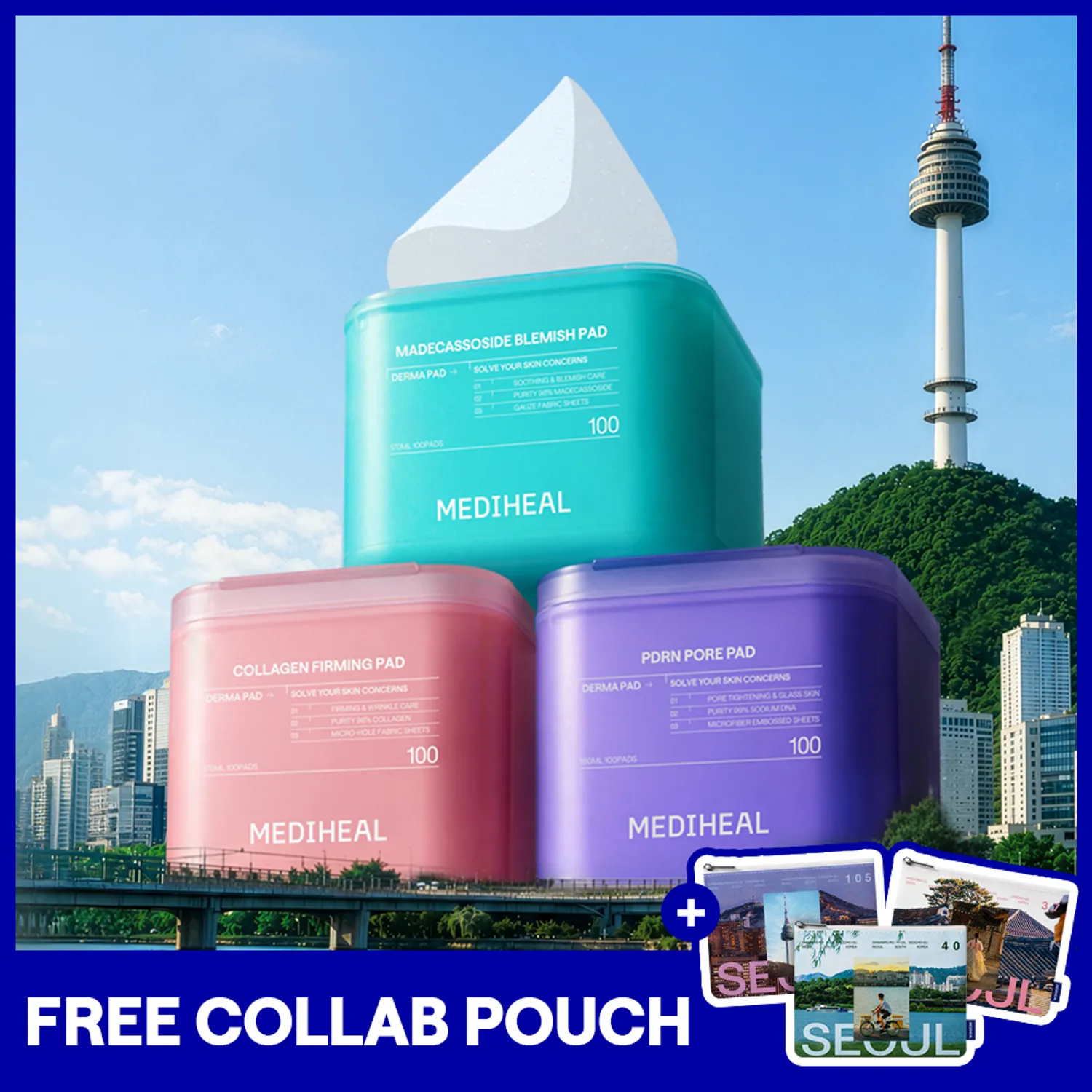
MEDIHEAL Toner Pads 100P Double Set — 100 pads, in 7 options (photo: OLIVE YOUNG Global).
Worth knowing
- Good: the 100-pad double set is a practical size for daily use, and the 7 options let you match the pad type to your skin instead of starting with an exfoliating formula.
- Keep in mind: check the option before you order — what the pad does depends on the type you pick, and exfoliating versions still need the 2–3 evenings a week limit in this guide.
For readers in Canada, this is a Canada-shipping route: orders ship from Korea by FedEx and usually arrive in 8–11 days, with free shipping on orders over US$60. Orders over CA$20 may be taxed on delivery. This route does not currently ship to the United States.
You can see the set at OLIVE YOUNG Global here: MEDIHEAL Toner Pads on OLIVE YOUNG Global. Use code VITAGUIDE1 for 5% off — it cannot be combined with other coupons.
Disclosure: this post contains an affiliate link. If you buy through it, I may earn a commission at no extra cost to you.


댓글
댓글 쓰기