Korean Scalp Care Routine: How to Use a Scalp Scaler, Toner and Essence Step by Step

Your hair products are fine — so why does your scalp still feel off?
You double-cleanse your face without thinking twice, yet your scalp — which is also skin, with more oil glands than your forehead — gets a rushed thirty seconds of shampoo and nothing else. By day two there is itching, flakes at the hairline, and roots that look flat no matter what styling product you use. That mismatch is exactly what Korean scalp care was built to fix.
The core idea is simple: treat the scalp like facial skin. Korean routines add a weekly exfoliating step called a scalp scaler, keep cleansing gentle, and then hydrate the scalp with lightweight toners and essences instead of heavy oils. Start with the scaler once a week, shampoo in two lighter passes, and never use a scaler and a strong clarifying shampoo at full strength on the same day until you know how your scalp reacts.
What is a scalp scaler, exactly?
A scalp scaler is a pre-shampoo exfoliating treatment designed for the scalp, not the hair lengths. Think of it as the scalp equivalent of a facial exfoliant. Common formats include sea-salt scrubs that physically lift buildup, and liquid scalers with ingredients such as salicylic acid that help dissolve excess sebum and dead skin around the hairline, crown and nape — the areas where buildup collects most.
Scalers are rinse-out steps. You apply the product directly to the scalp in sections, massage gently with fingertips (never fingernails) for about two to three minutes, let it sit briefly if the product directs you to, then rinse and follow with shampoo. It replaces guesswork with a dedicated step, used occasionally — not a new daily obligation.
How often should you use a scalp scaler?
For most people, once a week is the safe starting point. Oily scalps or heavy styling-product users sometimes do well with twice a week. Going beyond twice a week risks over-exfoliation — dryness, sensitivity and more flaking, which is the opposite of the goal. If you already use a clarifying shampoo regularly, scale back one of the two. Your scalp’s response over two to three weeks is the real schedule: comfortable and clean for longer means you found your frequency; tight, itchy or irritated means you went too far or too often.
The full Korean scalp care routine, step by step
Step 1: Scalp scaler (1–2 times per week, before shampoo)
Part dry or slightly damp hair into sections. Apply the scaler directly along the parts, focusing on the hairline, crown and nape. Massage with fingertips for 2–3 minutes, then rinse thoroughly before shampooing.
Step 2: Gentle double shampoo
First pass removes surface oil and product. Second pass — with less product than you think — actually cleanses the scalp. Massage the scalp, let the lather cleanse the lengths as you rinse, and avoid scrubbing the ends, which are the oldest and most fragile part of your hair.
Step 3: Treatment or hair mask (on the lengths, not the scalp)
Apply conditioner or a mask from mid-lengths to ends and leave it for the time on the label. Keeping rich masks off the scalp prevents the weighed-down roots you just worked to fix.

Step 4: Scalp toner or essence (after washing, on towel-dried scalp)
This is the step most beginners skip and the step that makes the routine feel Korean rather than generic. A lightweight scalp toner or essence is applied along your part lines and patted in — no rinsing. These products are formulated to feel like water, not oil, so they hydrate without undoing your wash day. If a product leaves your roots greasy, use less and apply only to the scalp skin, not the hair.
Step 5: Dry the scalp fully
Leaving the scalp damp for hours under a towel turban can leave it feeling uncomfortable and musty. Dry the roots first with a dryer on a warm or cool setting, then finish the lengths however you prefer.
Which scalp type needs what?
Oily scalp
- Scaler: start once weekly, move to twice weekly only if day-two oil improves without irritation
- Focus: thorough double shampoo, lightweight toner, masks kept strictly on the ends
Dry or flaky-feeling scalp
- Scaler: once weekly at most, gentler liquid formats over coarse scrubs
- Focus: do not stack a scaler and a clarifying shampoo on the same day; hydrate with a scalp essence after washing
Sensitive scalp
- Scaler: patch-test any new product, start once every 10–14 days
- Focus: fragrance-light products, fingertip pressure only, and stop any product that stings persistently
At a glance
- Scalp scaler: 1x per week to start, 2x max for oily scalps
- Massage: fingertips only, 2–3 minutes
- Double shampoo: two light passes beat one harsh pass
- Mask: mid-lengths to ends, never the scalp
- Essence: on the scalp skin, in small amounts, no rinsing
Common mistakes that undo a good routine
- Using a scaler every day because the first use felt amazing — over-exfoliation reliably backfires within a couple of weeks
- Scratching with fingernails, which can irritate the scalp surface
- Piling conditioner and hair oil onto the scalp itself, then blaming the shampoo when roots go flat
- Judging the routine after one wash — give any new scalp routine at least three weeks before deciding
- Treating a persistent, spreading or painful scalp problem as a cosmetic issue. Flaking and itching have medical causes too; if symptoms persist, worsen, or involve pain, sores or significant hair loss, see a dermatologist rather than buying another product

Related reading
- K-Beauty for Beginners — Simple 5-Step Routine: https://daily-vitamin-health-guide.blogspot.com/2026/11/k-beauty-for-beginners-simple-5-step.html
Have you ever tried a scalp scaler, or is your scalp routine still just shampoo and hope? Tell us your scalp type in the comments and what has — or has not — worked for you.
This article is for general information only and is not medical advice. Cosmetic products do not treat scalp diseases or hair loss. If you have persistent scalp symptoms, please consult a dermatologist.
Sources: Product usage guidance from established Korean scalp-care brands (scaler frequency and application); general scalp-care guidance summarized from K-hair care references consulted for this article.
The Step 1 product, if you want one to start with
The scaler in Step 1 does not need to be a scrub. This guide recommends starting with a liquid format, once a week, applied in sections along the parts — and that is how the Solep Hair Root Aquapik Scalp Scaler is used: a 250 ml liquid scaler, sold on its own or as a set with a scalp brush for parting and application.
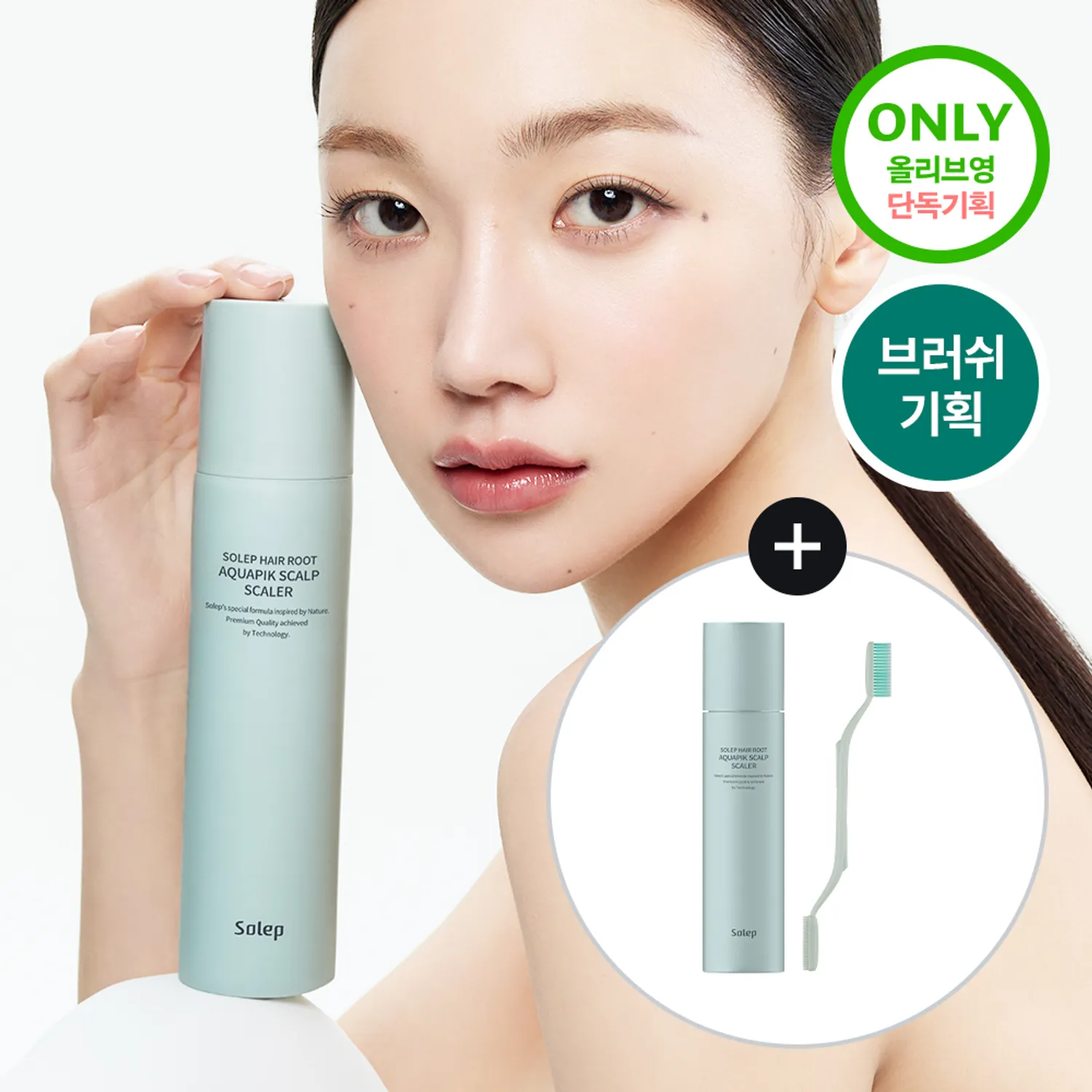
Solep Hair Root Aquapik Scalp Scaler, 250 ml — sold as a single bottle or as a set with a scalp brush (photo: OLIVE YOUNG Global).
Worth knowing
- Good: the liquid format fits the routine in this guide — it is applied to the scalp in sections and rinsed out, rather than scrubbed through the hair lengths.
- Good: at 250 ml, one bottle lasts a while at once-a-week use, and the set option adds the brush used for sectioning.
- Keep in mind: it is sold as a single bottle or as a set with the brush, so check which option you are ordering — and keep it to the weekly frequency in this guide, not daily use.
For readers in Canada, this is a Canada-shipping route: orders ship from Korea by FedEx and usually arrive in 8–11 days, with free shipping on orders over US$60. Orders over CA$20 may be taxed on delivery. This route does not currently ship to the United States.
You can see it at OLIVE YOUNG Global here: Solep Hair Root Aquapik Scalp Scaler on OLIVE YOUNG Global. Use code VITAGUIDE1 for 5% off — it cannot be combined with other coupons.
Disclosure: this post contains an affiliate link. If you buy through it, I may earn a commission at no extra cost to you.


댓글
댓글 쓰기