K-Beauty Sunscreen Guide: How to Choose the Right SPF for Your Skin Type

Photo: Sunscreen squeezed onto a palm, ready to apply. The right sunscreen is the one you will actually enjoy wearing every day. (Photo: Unsplash)
The sunscreen you love is the sunscreen you wear — and K-beauty finally made wearing it easy.
Why sunscreen is the hardest step to get right
Ask anyone what they skip in their skincare routine and the answer is usually sunscreen. Not because they do not know it matters, but because the sunscreens they grew up with were thick, greasy, left a white cast, stung the eyes and sat badly under makeup. It is hard to build a daily habit around a product you dislike, and for years that was the real problem with sunscreen — not the science, but the experience of wearing it.
Korean sunscreens changed that conversation. Instead of treating sun protection as a heavy beach product, K-beauty brands made it as light as a moisturizer, as comfortable as a serum, and as invisible as a primer. The result is a shelf full of sunscreens people actually finish, repurchase and recommend to friends. This guide explains how to choose one: what SPF and PA mean, what to look for by skin type, how much to use, how often to reapply, and how to take it off at night.
What makes K-beauty sunscreen different?
There are three things most people notice first about a Korean sunscreen. The first is texture: many are thin, watery or gel-cream formulas that spread easily and sink in quickly instead of sitting on the skin. The second is finish: they tend to leave a soft, dewy or natural finish rather than a heavy white layer, which is why so many work well under makeup. The third is skincare thinking: many formulas include hydrating and soothing ingredients — rice extract, probiotics, hyaluronic acid, green tea, panthenol — so the sunscreen feels like part of a routine rather than a chore on top of it.
None of that changes the job a sunscreen has to do, which is to filter ultraviolet light. In Korea, sunscreens are regulated as functional cosmetics, and products are usually labelled with both an SPF number and a PA grade: SPF measures protection against UVB, the rays that burn, and PA measures protection against UVA, the rays linked to ageing and to deeper skin damage. Look for SPF 50+ and PA++++ on the label for the highest grades sold in everyday products.
SPF and PA, explained in plain terms
- SPF 30: A good everyday baseline that blocks about 97% of UVB rays when applied properly — suitable when you are mostly indoors with some time outside.
- SPF 50+: Blocks about 98% of UVB rays when applied properly, and is the level most dermatologists suggest for long days outside, for sensitive skin and for anyone who wants a comfortable margin.
- SPF 100: Offers a slightly higher theoretical margin, not double the protection, and can feel heavier; SPF 50+ is enough for most people if it is applied generously and reapplied.
- PA+ to PA++++: More plus signs mean a higher grade of UVA protection, with PA++++ the highest grade on Korean labelling.
- Broad spectrum: The product protects against both UVA and UVB; on Korean products the PA grade shows the UVA side, while Canadian and American products say "broad spectrum" instead.
Numbers only work if you use enough product. A useful guide is about a quarter of a teaspoon, or two finger-lengths of cream squeezed along the index and middle fingers, for the face and neck. That is more than most people use, which is why most of us get less than the labelled protection in real life. Apply it as the last step of your morning routine, about 15 minutes before you go out, and let it settle before makeup.

Photo: A woman in a blue cap applying sunscreen on a sunny day. About two finger-lengths of cream covers the face and neck. (Photo: Unsplash)
Choose by your skin type
- Oily skin: Choose a gel, watery lotion or fluid with a matte or natural finish. Lightweight formulas that absorb quickly and feel weightless are the easiest to wear, and a product that leaves a dewy glow may look too shiny by midday on very oily skin.
- Dry skin: Choose a moisturizing cream or essence type with hydrating ingredients, and use it instead of — or on top of — your usual moisturizer. A creamy formula keeps comfortable skin from feeling tight by the afternoon.
- Sensitive skin: Choose a fragrance-free formula with few added ingredients, and test it on a small area first. Mineral filters such as zinc oxide and titanium dioxide are often suggested for sensitive skin, although modern chemical filters are also made in gentle formulas — what matters most is how your skin reacts.
- Combination skin: Choose a light gel-cream and adjust the amount by zone: a little more on the cheeks and forehead, less on the T-zone if it gets shiny.
- Dark or deep skin tones: Choose a formula described as leaving no white cast, ideally a clear or tinted finish, and test it on the jawline first. Many K-beauty sunscreens are made to blend invisibly, which is one reason they became popular across skin tones.
- Blemish-prone skin: Choose a non-comedogenic, lightweight formula, and be honest about how your skin reacts to a new product in the first week — stop using a product that causes breakouts rather than trying to wait it out.
How to apply, and when to reapply
Sunscreen only works where you put it. Apply it to the face, neck and ears, and remember the backs of the hands if you drive. Reapply every two hours when you are outside, and sooner after swimming, sweating or towelling off. A tube that lasts all summer is not a badge of honour — a sunscreen you finish is a sunscreen you used, and a 50 mL tube used properly lasts about two weeks of daily use, not months.
Apply it on cloudy days too: up to 80% of UV rays can pass through light cloud, and UVA passes through windows. Winter is no exception in Canada. The sun is lower, but snow reflects UV, and a bright day on a ski hill or a winter walk can give you as much exposure as a summer afternoon. If the rule is simple, let it be this: if you go outside, you wear it.

Photo: Bright sun, water and sand all add up — reflect and reapply on beach days. (Photo: Unsplash)
Five mistakes to stop making
- Using too little: A pea-sized dab is not enough for a whole face. Use the two finger-lengths guide.
- Only wearing it in summer: UV is present all year, and winter sun on snow is real.
- Skipping the neck and ears: They burn and age just like the face, and they are easy to forget.
- Trusting yesterday's application: A morning application does not last through an afternoon outside.
- Keeping an old tube forever: Sunscreen expires, and an old or heat-damaged tube may not protect as claimed. Replace it each season if you are unsure.
How to take it off
Korean sunscreens are made to stay put, so wash them off properly at night. Start with a cleansing oil or micellar water to break the film down, then follow with your usual gentle cleanser — the classic K-beauty double cleanse. If your skin feels dry afterwards, your cleanser may be too strong rather than your sunscreen too heavy, and a gentler wash usually fixes it.
Frequently asked question
Can sunscreen replace my moisturizer? Often yes, in the morning: many moisturizing K-beauty sunscreens are hydrating enough for normal to oily skin on their own. If your skin is dry, layer the sunscreen over your moisturizer. Let each layer settle for a minute before adding the next, and if the result pills or balls up, the layers are not getting along — try a different pairing rather than adding a third product.
A sunscreen worth trying first
If you have read this far and still do not know which bottle to start with, one product fits almost everything in this guide: the Beauty of Joseon Relief Sun : Rice + Probiotics SPF50+ PA++++. It is a well-known K-beauty sunscreen, and its light, moisturizing cream texture is exactly the kind of formula that turned sunscreen from a chore into a habit for many people.
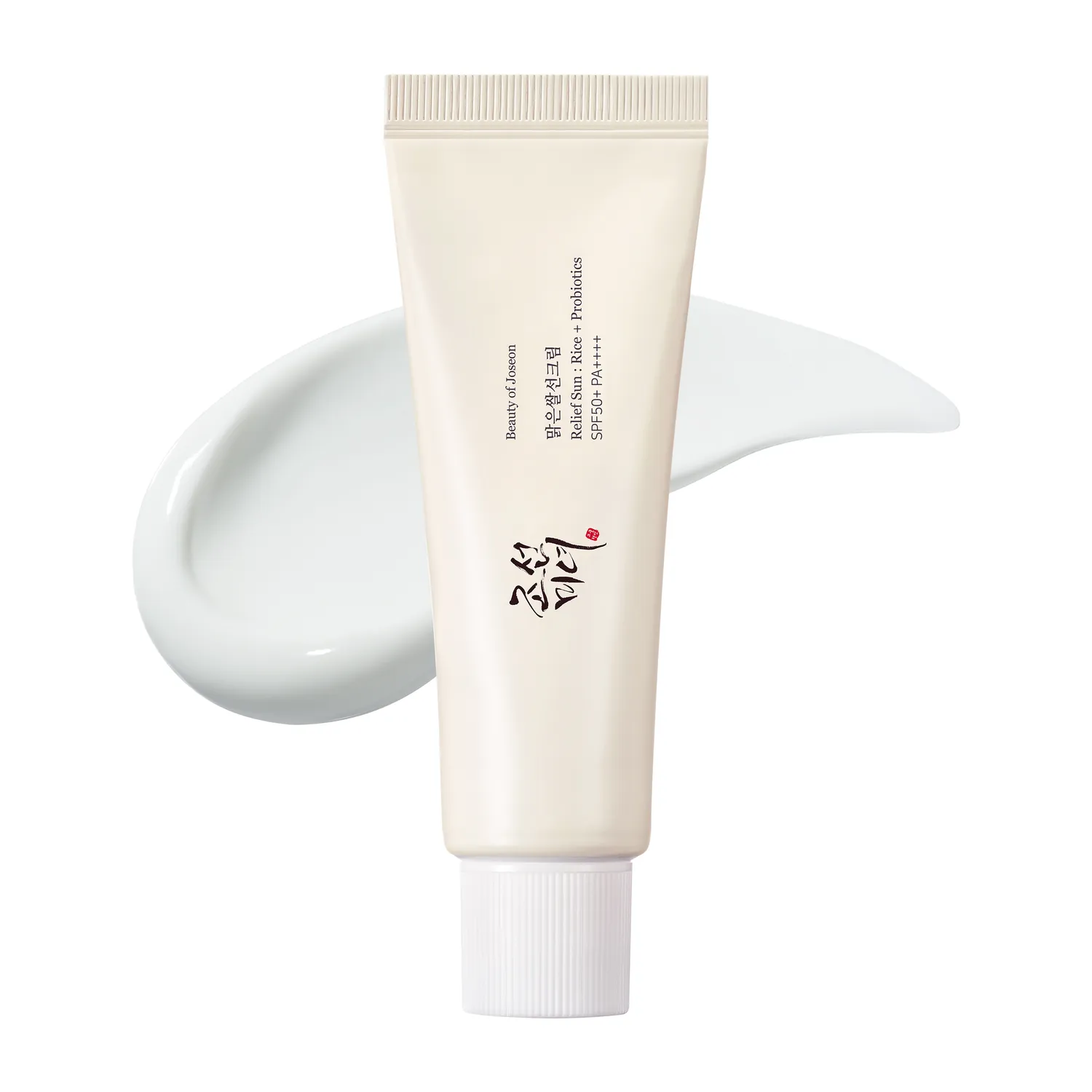
Photo: Beauty of Joseon Relief Sun : Rice + Probiotics 50 mL, SPF50+ PA++++. Official product photo from OLIVE YOUNG Global.
What stands out: It is a lightweight, moisturizing cream that is absorbed without stickiness or a cloudy, white finish, according to OLIVE YOUNG's description, and it sits well under makeup. It carries SPF50+ with PA++++, the highest UVA grade on Korean labelling, and uses rice extract and probiotics in a gentle, daily-wear formula that OLIVE YOUNG describes as comfortable all year round.
What to know before buying: The dewy, moisturizing finish may feel too shiny if your skin is very oily, and some reviewers with oily or blemish-prone skin reported breakouts or said it did not suit them. At CA$25.56 for a 50 mL tube, it also costs more than a basic drugstore sunscreen, and at the full recommended amount a tube does not last very long — which is true of any sunscreen used properly, but worth knowing before you buy.
Buy it on OLIVE YOUNG Global — Beauty of Joseon Relief Sun : Rice + Probiotics 50mL (CA$25.56). Get 5% off with reward code VITAGUIDE1 at checkout; the code cannot be combined with other coupons.
Shopping from Canada: orders ship from Korea via FedEx and arrive in 8–11 days, with free shipping on orders over US$60. Please note that shipping to the United States is not currently available, and if your order is over CA$20, taxes may be charged on delivery.
This post contains affiliate links, and if you buy through them we may earn a commission at no extra cost to you.
Related reading
Centella Asiatica in K-Beauty: What Cica Really Does
Korean Collagen Masks Explained
Which sunscreen are you wearing right now — and does it pass the test of actually being finished and repurchased? Tell us in the comments, and share this guide with anyone who still thinks sunscreen has to feel heavy to work.
Follow Daily Vitamin & Health Guide for one clear K-beauty guide each week.
Disclaimer: This article is for general information only. Cosmetic results vary by person and skin type, products can cause irritation or breakouts, and a patch test is a good idea with any new product. If you have a skin condition, ask a dermatologist or healthcare professional before changing your routine.


댓글
댓글 쓰기